
Indian benchmark indices Sensex and Nifty closed lower, with the Nifty recording its fourth consecutive day of decline, primarily due to elevated oil prices and ongoing geopolitical tensions between the US and Iran, which dampened investor sentiment.

Park only savings that need not be touched for many years, says Devangshu Datta.

'Treating stock brokers as merchants for MDR is fundamentally misplaced.'

Indian benchmark equity indices extended their losing streak for a fourth consecutive day, with the Sensex tumbling 417 points due to rising crude oil prices and a significant sell-off in IT stocks, impacting overall investor sentiment.

Indian benchmark indices, Sensex and Nifty, experienced a significant drop of over 1 per cent, driven by a bearish trend in global markets, weakness in HDFC Bank and IT firms, and fresh foreign fund outflows.

From the Sensex firms, Adani Ports, NTPC, Power Grid, HCL Tech, Tata Steel, Sun Pharma, Trent and Asian Paints were among the major gainers. However, Bharat Electronics, Eternal, Mahindra & Mahindra and Maruti were among the laggards.

While we have listed above some key rules to be adhered to before selecting a company for investment, there is one bigger rule that applies to stock market investing: discipline.

Accel's early investment in RentoMojo, a furniture and appliance rental platform, has paid off handsomely with the company's strong debut on the stock exchanges, listing nearly 19 per cent above its issue price after a significantly oversubscribed IPO.

'I don't see fear becoming a dominant factor for retail investors.'

The global artificial intelligence (AI) boom has significantly reshaped equity markets, with Taiwan surpassing India to become the world's fifth-largest stock market. India has seen its market capitalisation decline by 7% year-to-date, while AI-linked economies like Taiwan and South Korea have surged.

Indian benchmark stock indices, Sensex and Nifty, extended their winning streak to a fourth day, with Nifty surging 1.60 per cent, driven by a sharp decline in crude oil prices and renewed foreign fund inflows.

'Regulations give a particular minimum amount of shares to be given in the OFS or IPO -- without which one cannot do the IPO.' 'We got that number on the day of filing of updated DRHP -- sufficient for us to go live with the IPO.'

The Nifty's stunning 200-point jump in the final minute of trading wasn't a glitch. It marked India's shift to a new, globally accepted system of end-of-day price discovery.

Indian benchmark indices, Sensex and Nifty, saw early gains driven by strong buying in IT stocks like HCL Tech, Tech Mahindra, TCS, and Infosys, alongside a significant boost from HDFC Bank.
Indian benchmark indices, Sensex and Nifty, closed flat on Friday, with elevated crude oil prices due to geopolitical uncertainties and a rebound in US Treasury yields making investors cautious and preventing a decisive market rally.

Indian benchmark indices Sensex and Nifty continued their upward trend for a second consecutive day, with the Sensex gaining over 800 points, driven by strong performances from heavyweights like Reliance Industries, ICICI Bank, and HDFC Bank, alongside positive cues from easing crude oil prices and robust IT sector earnings.

Companies in the fast-moving consumer goods (FMCG) sector are losing favour with equity investors, with their price-to-earnings (P/E) ratio declining to its lowest level in six years, now trading at 38.8 times trailing earnings.

Do not exit in panic or buy falling stocks without reassessing fundamentals; instead, build a watchlist and invest gradually with a disciplined, long-term approach.

Manappuram declared consolidated assets under management (AUM) growth of 27 per cent year-on-year (Y-o-Y) (5.1 per cent quarter-on-quarter or Q-o-Q) to Rs 38,950 crore. Net interest income (NII) saw a margin expansion of 24 basis points (bps) Q-o-Q to 15.44 per cent.

From the 30-Sensex firms, Tata Steel, Kotak Mahindra Bank, Reliance Industries, Axis Bank, Titan and Trent were among the biggest gainers. However, Tata Consultancy Services, Tech Mahindra, Infosys, Bajaj Finance and Sun Pharma, were the laggards.

Benchmark equity indices Sensex and Nifty tumbled in early trade on Wednesday, tracking a bearish trend in Asian markets, as the conflict in West Asia widened, driving oil prices higher.

Newly listed companies Vedanta Aluminium Metal, SBI Funds Management and Manipal Health Enterprises have entered the Rs 1 trillion mcap list since March 2026.
The narrative on China is changing post the recent stimulus measures, and it will be hard for global investors to ignore the Chinese markets.

Indian stock exchanges are actively preparing to implement a new closing auction mechanism (CAS) from August 3, aimed at enhancing transparency in determining closing prices for securities with derivative contracts.

Indian stock markets are expected to remain highly sensitive to geopolitical developments, particularly the US-Iran situation, and crude oil prices this week, with analysts also highlighting the influence of the rupee-dollar trend, foreign investor activity, and upcoming inflation data.

Indian stock market benchmark indices closed higher, driven by strong performance in blue-chip bank shares and a positive trend in global markets, with hopes of progress in US-Iran peace negotiations also contributing to optimism.
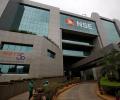
The National Stock Exchange (NSE) has set its initial public offering (IPO) price band at Rs 1,700-1,785 per equity share, with the subscription period running from September 17 to September 21, aiming to raise up to Rs 22,569 crore.
Indian stock markets ended a five-day losing streak, with the Sensex surging 776 points and the Nifty gaining 228 points, driven by a significant drop in crude oil prices and easing geopolitical tensions in West Asia.

Smallcap and midcap funds now account for nearly 30% of active equity MF folios, as stock-market gains revive investor appetite for high-growth segments.
Indian benchmark indices Sensex and Nifty tumbled nearly 1 per cent for the third consecutive day, driven by a sharp spike in crude oil prices and significant selling in bank stocks, with Brent crude jumping to USD 95.27 per barrel.

Indian benchmark indices, Sensex and Nifty, closed higher, primarily driven by bank stocks and encouraging US inflation data, which fuelled expectations of a less aggressive Federal Reserve monetary policy. However, escalating US-Iran hostilities tempered investor sentiment, leading to some profit-taking.

Investors opening new brokerage accounts must choose a broker suited to their style.
Among Sensex firms, Eternal, Infosys, Asian Paints, HDFC Bank, Bajaj Finserv and Titan were the major gainers. However, Tata Steel, Tech Mahindra, Adani Ports and Bharat Electronics were among the laggards.

The much-awaited upturn in the stock market on Thursday added more than Rs 1.17 lakh crore to investor wealth, which had plunged by over Rs 4.35 lakh crore in the past four days amid heavy sell-offs.

Indian benchmark indices Sensex and Nifty recorded their third consecutive day of gains, primarily driven by an over 8 per cent surge in Bajaj Finance following strong Q1 FY27 results, coupled with significant foreign fund inflows and a dip in crude oil prices.
Indian equity markets closed higher, driven by gains in PSU bank, auto, and financial stocks, following the US Supreme Court's decision on tariffs. Sensex climbed 479.95 points to 83,294.66, and Nifty advanced 141.75 points to 25,713.

The National Stock Exchange of India's (NSE) mega Rs 22,569-crore initial public offering (IPO) opened for subscription, receiving 9 per cent bids on its first day, with strong participation from anchor investors.
The National Stock Exchange of India's (NSE) mega Rs 22,569-crore initial public offering (IPO) was subscribed 43 per cent on its first day of bidding, making it India's second-largest public issue after Hyundai Motor India's Rs 27,870-crore IPO in 2024.

The Indian stock market mythos of 36 years is wrapped in a diaphanous negligee, lashed together by a delicate, etheric sash of 1.6 bull markets. To make money from here on will require a ground invasion, trench by trench, rather than carpet bombing. Way more difficult, points out Shankar Sharma.

Earlier, most investors counted on traditional options like fixed deposits, gold, or property. But in 2026, you will have access to a much wider range of opportunities across different markets and sectors.
